“There are many aspects of being neurodivergent that are highly congruent with creativity and living a creative life.”
Over recent years, I’ve come to notice a good number of the creatives I coach and mentor are neurodivergent. Some arrive with an ADHD or autism diagnosis, often received well into adulthood. Others have never had an assessment and may be beginning to wonder whether the way they think and experience the world might have a name.
Personally, I was diagnosed AuDHD in my mid-forties. It’s been a helpful and affirming process. It’s provided more clarity around how my mind works, why I’ve made various accommodations and set up different systems in my work and life, and given me more basis to foster even greater self-compassion and curiosity when it comes to living in a world that can feel quite overwhelming and, at times, downright stressful.
Of course, there are many aspects of being neurodivergent that are highly congruent with creativity and living a creative life. We usually have the ability to hyperfocus, come up with lots of ideas, notice small details, and spot patterns - all very useful for creative expression. Working with fellow neurodivergent folks absolutely lights me up as we often speak a similar language, face similar relatable challenges and experience the world with a nervous system that works differently from the majority of folks’ (what is known as the neurotypical population).
Whatever your story and experience of neurodivergence, you're very welcome here. I believe as creatives we flourish and prosper when we find support that fits how our minds and bodies work.
What I've noticed over the years is how often neurodivergent creatives have spent their working lives trying to run their days on systems, timelines and expectations built for others. That might look like rigid content calendars and five-year plans, or being ‘consistent’ in our marketing, working on one project at a time or deciding to nitche into a targeted area. These all may look sensible on paper, but for many of us they feel like wearing a pair of shoes in the wrong size, and when we inevitably abandon them, it’s easy and common to blame ourselves.
Working with interest and novelty
Many neurodivergent people, myself included, are motivated by interest far more than by importance. A project that has lost its spark can feel almost impossible to return to, while a fresh idea can carry us through a whole weekend of happy, absorbed work. In coaching, we treat this as useful information about how you work best.
We might design offerings that change with the seasons, so there's always something new on the horizon. We might plan a body of work as a series of short sprints, each with its own small finish line. Multi-passionate creatives often hear that they need to niche down to a single thing, and I'd gently offer another possibility, which is to find the thread that runs through all your interests and let that become the heart of your business.
An idea bank can help here too. Keep a place, such as a notebook, Google doc or a notes app, where each new idea can land. Writing it down lets your mind relax, and when you're ready for a new project you'll have a whole collection to choose from. Twyla Tharp, dance choreographer and author of one of my favourite books “The Creative Habit”, calls this process having ‘creative containers’ for your projects. Places where you can put your ideas and rest knowing you can find them again later. She uses actual physical boxes to keep video tapes, clippings, all kinds of things to use as inspiration for her next choreography project. We can do the same with lists, boxes, sketchbooks, or a mixture of the above.
Designing a week that works with your brain
Some neurodivergent creatives love theme days, where each day has one main focus, such as studio work or admin. Others find that too rigid and prefer a short menu of tasks they can choose from depending on their energy. A few ideas that many of my clients find helpful:
Keep a visual weekly plan where you can see it, instead of relying on memory
Pair a dull task with something enjoyable, like music or a favourite drink
Use a timer for short bursts of focused work, with breaks built in
Leave buffer time between tasks, because transitions can take more energy than we expect
Plan your hardest task for the time of day your focus and energy is strongest
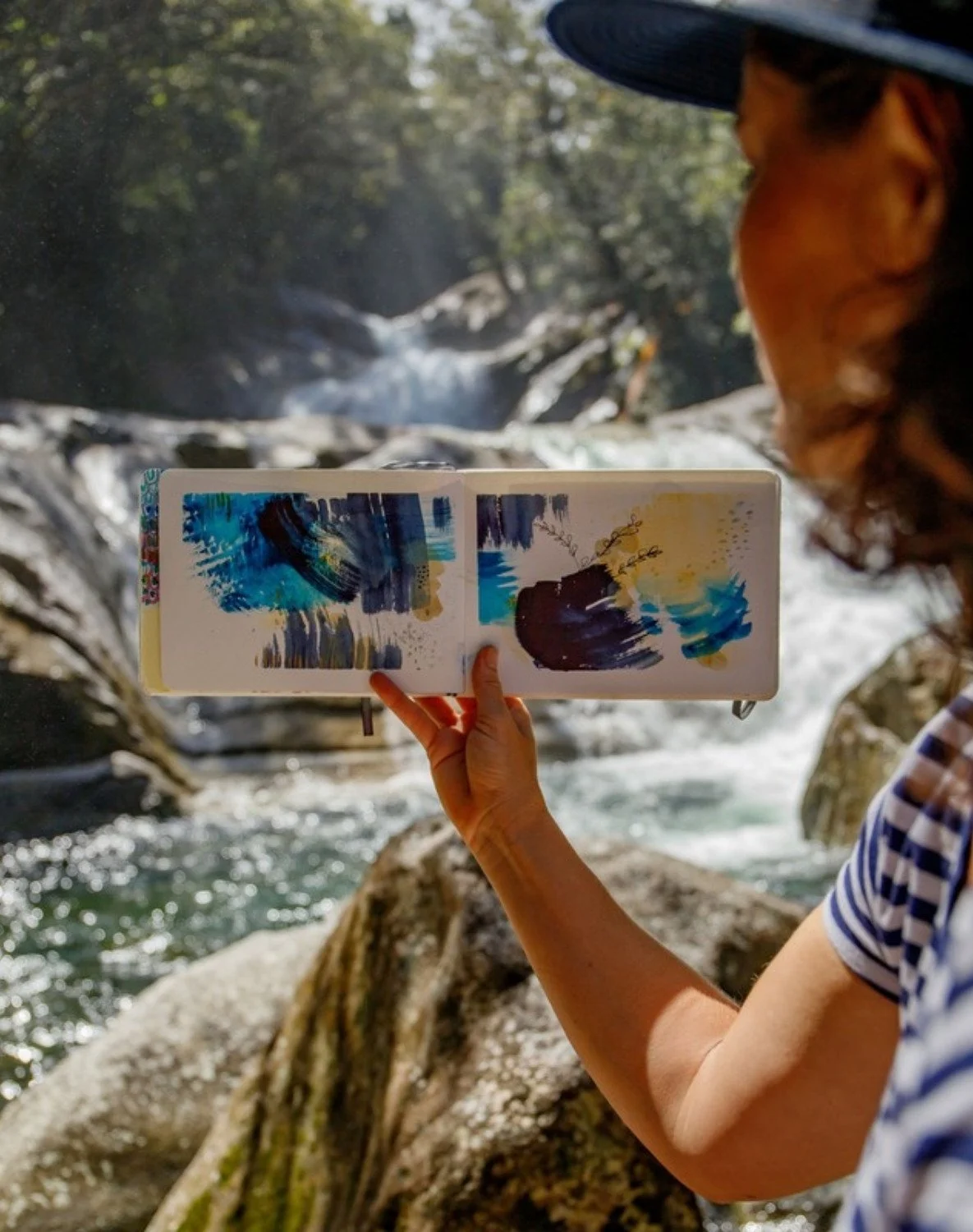
Image: A sketchbook full of colour, held up to the light.
Gentle scaffolding for the tricky bits
The admin side of a creative business can be hard going when executive function is unpredictable. Invoices and unanswered emails have a way of piling up into something that feel can quickly feel enormous. Together we look for supports that make these tasks lighter. A visual plan on a whiteboard above your desk can hold what a to-do list never quite manages, and body doubling, where you work alongside someone else on Zoom, can carry you through the tasks you've been circling for weeks.
Templates can be a gift as well. Saving a few standard emails, such as replies to commission enquiries or invoice reminders, means you're not starting from scratch. Simple automations, like a payment system that sends receipts for you, can help lift a lot of weight.
We also look at where your energy is best spent and where it might be wise to bring in help. From experience, a bookkeeper at tax time or a few hours a month from a virtual assistant can free up a surprising amount of creative energy.
For those of us also managing chronic health conditions, the pacing we require is counted in from the start, alongside a generous helping of self-compassion.
Marketing that suits a neurodivergent brain
Marketing often goes more smoothly when it rides the waves of your focus. When you're in a period of hyperfocus or excitement about a project, capture it. Take photos and record voice notes, then turn them into posts and newsletters later. One good piece of writing can become a newsletter and several social posts, which saves you from having to come up with something new every time.
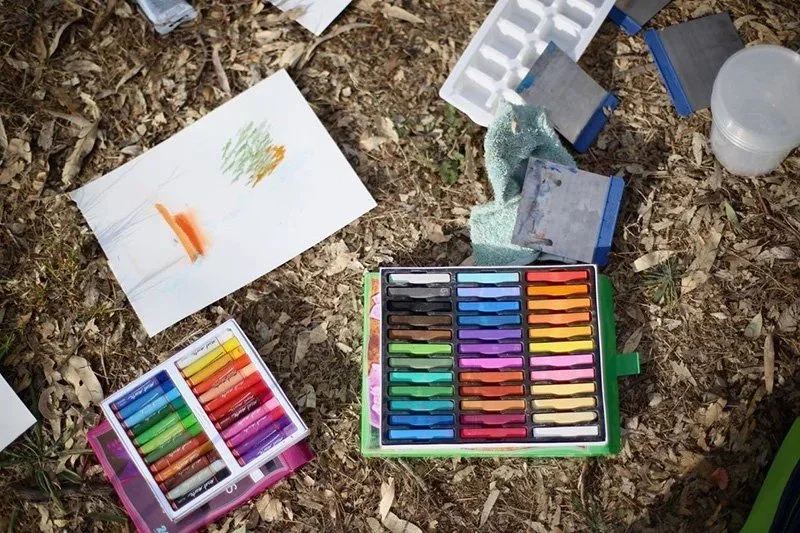
Image: Soft pastels and paper, ready for a playful session.
Sharing as much as feels right
Whether you talk publicly about being neurodivergent is entirely your choice. Some creatives find that sharing it helps them connect with collectors and students who see themselves in their story. Others prefer to keep it private. Your business can thrive either way.
Celebrating the way you see
Neurodivergent minds often notice patterns and connections that others miss. Some of us hyperfocus on a painting until the light has gone, or hold an entire novel's structure in our heads while forgetting to eat lunch. These ways of seeing are often what the people who love our work are responding to, and we can build the business to protect them.
If you're a neurodivergent artist or writer and you'd love support from someone who understands, I'd be so glad to hear from you. My private coaching is shaped entirely around you, and you can apply for a complimentary 90-minute session on my Business Coaching page.

About Nicola Newman
I'm a Creative Business Coach, Award-Winning Artist & Mentor for Creative Hearts who want to flourish, flow & prosper.
My passion is inspiring and supporting Creative Hearts to trust their inner wisdom and carve out a life that’s personally meaningful and fulfilling to them.
I share practical, evidence-based tools for Creative Hearts seeking to improve their lives or businesses. My work draws from acceptance and commitment therapy (ACT), mindfulness-based techniques, body-based practices, and neuroscience -- and my own creative living adventures -- among other approaches.
My mission is to support Creative Hearts to:
Dissolve creative blocks, develop a loving relationship with themselves, nurture their creativity and reframe the beliefs and patterns that keep them from following their heart and making the creative contribution they would love to make in the world.
My approach is to embrace gentleness, playfulness and self-care to navigate self-doubt and instead cultivate deep self-trust so you can truly enjoy the creative process, bring together your body of work, make money doing what you love and leave a creative legacy you’re proud of.
Let’s pour a cuppa and get to know one another, shall we? :) Read more about my story here.